If you want a Santa Cruz home that feels easy to enjoy and easy to step away from, downtown deserves a closer look. For many buyers, the challenge is finding a place that offers coastal access without the upkeep of a more house-oriented lifestyle. Downtown Santa Cruz stands out because it pairs an urban, walkable setting with strong connections to the beach, the river corridor, and everyday services. Let’s dive in.
Why downtown fits lock-and-leave living
Downtown Santa Cruz is the city’s primary retail, commercial, professional, and employment center, and the city’s Downtown Plan describes it as a compact, high-density, pedestrian-oriented district. That matters if you want a home base that supports convenience over constant maintenance. Instead of centering daily life around a yard, long drives, or dispersed errands, downtown is designed around access.
The city’s planning direction also reinforces that lifestyle. Recent downtown planning updates emphasize mixed-use growth, additional housing, public amenities, pedestrian infrastructure, and stronger links to the river and beach. For a buyer looking for a lower-maintenance second home or part-time residence, that creates a practical foundation for lock-and-leave living.
The city has also stated that downtown should include a diversity of housing types, easy access to transportation, and nearby amenities to reduce car trips and support a walkable urban environment, as noted on the Downtown Library & Affordable Housing project page. While “lock-and-leave” is a buyer lifestyle lens rather than a formal planning term, the planning priorities line up well with that goal.
What homes look like downtown
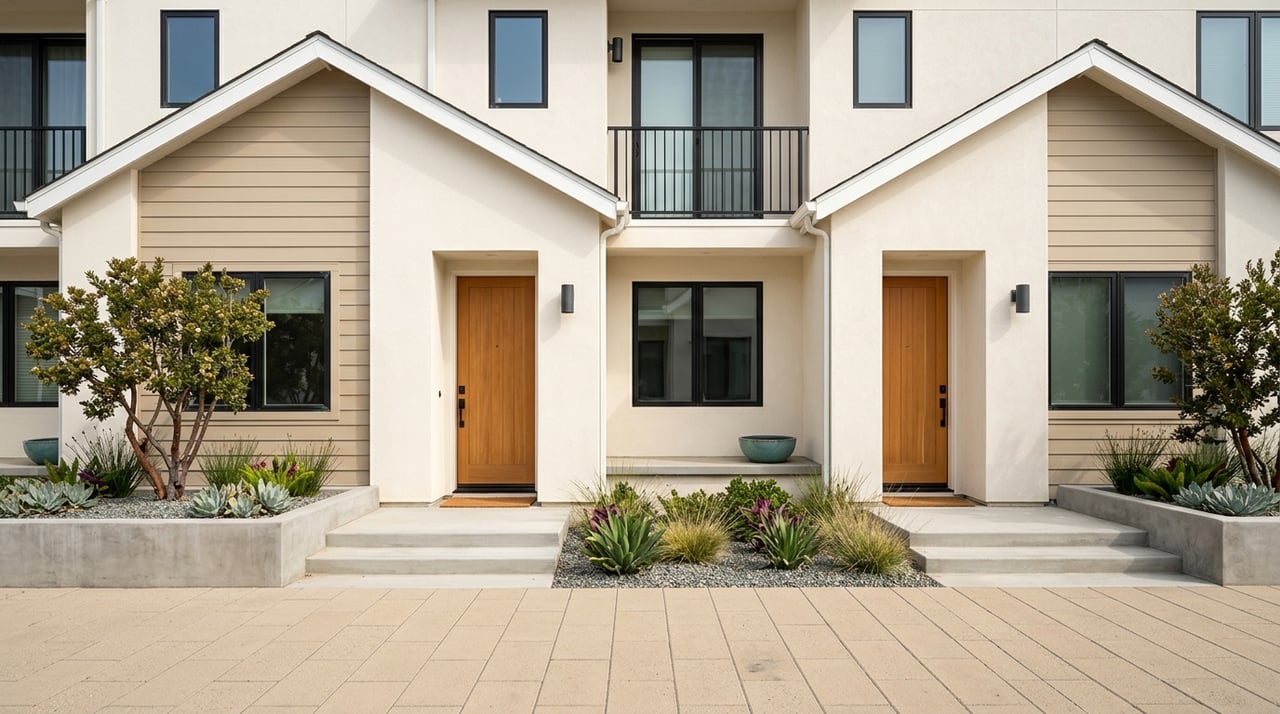
If you are picturing traditional detached homes with large lots, downtown is generally not that kind of housing environment. The dominant pattern is multifamily and mixed-use development, with residential units above retail, apartment-style buildings, and new housing on former commercial or parking sites. The Downtown Plan explicitly encourages upper-level housing and mixed-use residential redevelopment in the core.
Recent city projects make that direction very clear. The Pacific Front project at 100 Laurel Street includes a six-story mixed-use building with 205 residential apartments and ground-floor commercial space, while the 530 Front/Soquel project includes 276 residential units with commercial space. The Downtown Library & Affordable Housing project will add 124 affordable units.
For buyers, the takeaway is simple: downtown Santa Cruz trends more toward condo- or apartment-style living than detached-home living. That can appeal to you if your priority is having a foothold in Santa Cruz with less emphasis on private outdoor maintenance and more emphasis on access, simplicity, and proximity.
Walkability is a real advantage
A lock-and-leave home works best when your day-to-day needs are close at hand. In downtown Santa Cruz, Pacific Avenue is the primary pedestrian corridor, and the city’s planning framework calls for pedestrian access to be direct, secure, and comfortable. The city also emphasizes walking, biking, and rolling as central parts of a livable downtown environment.
That matters in practical ways. You can think less about getting in the car for every errand and more about stepping outside and moving through a compact district. For many buyers, that changes how a home functions, especially if you are using it as a second residence, a weekender, or a base between Bay Area and coastal life.
Beach and river access add flexibility
One of downtown Santa Cruz’s strongest advantages is that it is not just urban. It is also closely tied to the coast and the river corridor. The Santa Cruz Riverwalk runs from the Highway 1 bridge through downtown to the Santa Cruz Beach Boardwalk, creating a direct link between the core and the waterfront.
The city also notes that the Coastal Rail Trail has improved bike and pedestrian access between downtown, the Boardwalk, Seabright, and the river path. For a lock-and-leave buyer, that means your lifestyle can feel broader than your building footprint. You may have a more compact home, but you gain immediate access to a much larger network of public spaces and destinations.
Transit and car-light options
Downtown also serves as a transit hub, which adds another layer of convenience. Santa Cruz METRO’s Riverfront Temporary Transit and Customer Experience Center is at 603 Front Street, and the current route network includes Highway 17 Express service to San Jose. That is helpful if you split time between Santa Cruz and the Bay Area or simply want more flexibility in how you travel.
Seasonally, the city’s Santa Cruzer Beach & Downtown Shuttle provides another car-light option. It connects downtown to the beach and wharf area on weekends and holidays from Memorial Day weekend through Labor Day. The city describes it as all-electric and ADA-accessible.
None of this means you will never use a car. It does mean downtown gives you more choices, and that can be a major benefit if convenience is part of your buying criteria.
Parking is urban, not suburban
Parking is part of the downtown conversation, and it helps to approach it with the right expectations. Downtown Santa Cruz has parking, but it is managed as an urban district rather than a driveway-based suburban setting. According to the Downtown Association parking guide, there are 20 parking locations downtown, including six free lots with time limits, plus garages, permits, meter parking, and more than 100 smart bicycle lockers.
At the same time, the city notes on its housing project materials that downtown parking is shared and that demand regularly exceeds supply. For some buyers, that tradeoff is worth it because the setting offers walkability, transit, and beach access. The key is understanding that downtown convenience comes from location efficiency, not from abundant private parking.
Lifestyle goes beyond convenience
A successful lock-and-leave location should be easy, but it should also be enjoyable. Downtown Santa Cruz offers more than practical access. It also has a year-round rhythm of events and cultural anchors that can make even a short stay feel full.
The Downtown Association highlights recurring programming such as the Wednesday farmers market, monthly outdoor markets, First Fridays, and the Wine Walk. Those events help activate the district throughout the year and give you built-in reasons to spend time downtown rather than planning every outing from scratch.
Core destinations also sit within a compact area. The Downtown Association points to places like the Museum of Art & History, the Del Mar Theatre, and Abbott Square Market as cultural anchors that bring together art, dining, entertainment, and gathering space. For a buyer who wants a home that feels connected to activity, that concentration is part of downtown’s appeal.
Downtown is actively managed
Some buyers like urban energy but still want signs that a district is cared for and supported. Downtown Santa Cruz offers that as well. The Downtown Ambassadors work seven days a week on Cedar, Front, Pacific, and nearby side streets, and the Downtown Information Kiosk at Pacific and Soquel provides directions and event support.
That detail may seem small, but it adds context to the daily experience. It shows that downtown is not just a cluster of buildings and businesses. It is an actively serviced district with ongoing attention to visitors, navigation, and public-facing support.
How downtown compares nearby
If you are deciding between downtown and a nearby coastal neighborhood, the difference often comes down to lifestyle format. City planning documents describe the Beach Area as predominantly residential, with tourist-related facilities concentrated along Beach Street, the Wharf, and Lower Pacific Avenue, while Lower Ocean is described as mostly residential. By contrast, Lower Downtown is a mixed-use development zone, and Upper Downtown includes a mix of residential, commercial, and community facilities, according to the city’s neighborhood planning materials.
In everyday terms, downtown is often the better fit if you want restaurants, services, culture, and transit close by. Nearby coastal residential areas may feel more neighborhood-scaled and house-oriented. Neither is inherently better. It simply depends on whether you want your Santa Cruz lifestyle centered more on doorstep access or on a more traditional residential setting.
Who downtown may suit best
Downtown Santa Cruz can be a strong match if you want to:
- spend more time enjoying Santa Cruz and less time managing a property
- prioritize walkability and access to dining, events, and services
- stay closely connected to the beach and river corridor
- use your home as a second residence or flexible coastal base
- accept a more urban parking and housing environment in exchange for convenience
For the right buyer, that balance is compelling. Downtown offers a lower-maintenance, high-access lifestyle that feels distinctly Santa Cruz, with urban energy and coastal proximity working together.
If you are weighing downtown against other Santa Cruz options, a local perspective can help you sort through building types, access patterns, and the lifestyle tradeoffs that matter most to you. The Lyng-Vidrine Team brings a refined, hands-on approach to helping buyers understand how each part of the market lives day to day.
FAQs
Is downtown Santa Cruz good for a second-home buyer?
- Downtown Santa Cruz can work well for second-home buyers who value walkability, mixed-use surroundings, beach access, and a lower-maintenance lifestyle.
What type of housing is common in downtown Santa Cruz?
- Downtown housing is typically multifamily and mixed-use, including residential units above retail and larger apartment-style or condo-style buildings rather than detached homes.
How walkable is downtown Santa Cruz for daily errands?
- Downtown Santa Cruz is designed as a pedestrian-oriented district, with Pacific Avenue serving as the primary pedestrian corridor and many amenities located close together.
Does downtown Santa Cruz have beach access?
- Yes. Downtown connects well to the waterfront through the Santa Cruz Riverwalk, the Beach Boardwalk area, and improved bike and pedestrian routes such as the Coastal Rail Trail.
Is parking easy in downtown Santa Cruz?
- Parking is available, but it is managed as an urban district with garages, meters, permits, and shared parking rather than the more private parking setup common in suburban neighborhoods.
How is downtown Santa Cruz different from nearby beach neighborhoods?
- Downtown is more mixed-use and access-focused, while nearby beach neighborhoods are generally described in city planning documents as more residential in character.